
Clackamas County Genealogy Records
Clackamas County holds some of the oldest records in Oregon, reaching back to 1843 when it was one of the first four districts of the Oregon Territory. The county seat, Oregon City, was the first incorporated city west of the Rocky Mountains. Genealogy research in Clackamas County taps into Donation Land Claims, pioneer court files, and vital records that chart the growth of the Pacific Northwest. Searching these archives connects you to the very roots of Oregon's story.
Clackamas County Genealogy and Pioneer Records
Clackamas County was created in 1843, years before Oregon even became a state. The county is named for the Clackamas Indians who lived along the river. Oregon City served as the territorial capital, and many of the first official acts in the region were recorded here. For genealogy researchers, this means Clackamas County has some of the most complete early records in all of Oregon.
Marriage records in Clackamas County date to 1849. That is just six years after the county formed. Deed records go back even further in some cases, tied to the Oregon City Land Office that processed Donation Land Claims. These claims gave free land to settlers who met certain requirements, and the records show who came, when they arrived, and where they settled in Clackamas County. The National Archives holds the federal side of these land claims, while local deed books track the transfers that followed.
County court journals from Clackamas County document the administration of the county from its earliest days. They record appointments, road orders, tax levies, and other actions that name local residents. For genealogy, these journals fill in details about daily life and community roles in Clackamas County during the pioneer era.
Clackamas County Records at the Clerk Office
The Clackamas County Clerk maintains land records, marriage records, and other official documents in Oregon City. The office offers an online property search tool. This lets you look up current and past ownership from your computer. For genealogy purposes, the property search can show who owned a parcel, when it changed hands, and what kind of document was filed. Deeds, mortgages, and liens all appear in the index.
Older Clackamas County records are stored in bound volumes and on microfilm. The clerk's staff can help you search the indexes. If you know a name and an approximate date, they can point you to the right book. These records are public under ORS Chapter 192. Anyone can ask to see them. You do not have to prove a family tie or give a reason for your search.
Visit the Clackamas County Clerk's office to view these records in person. The office is located in the county courthouse in Oregon City.
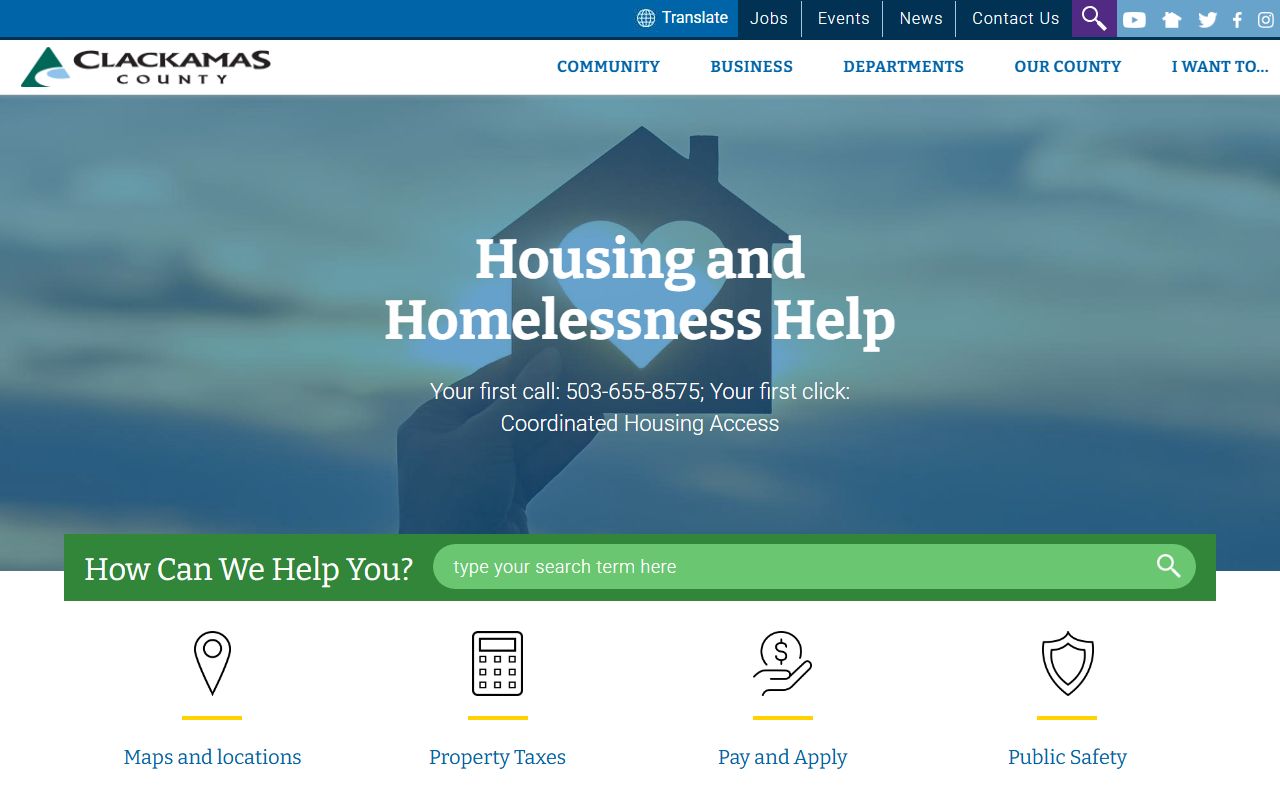
Above is the Clackamas County assessment and taxation portal. Tax records can reveal property ownership details useful for tracing Clackamas County ancestry lines.
Note: The online property search covers recent decades, but older Clackamas County records require an in-person visit or a request to the clerk's office.
Clackamas County Ancestry at the Historical Society
The Clackamas County Historical Society operates the Museum of the Oregon Territory and the Stevens-Crawford Heritage House, both in Oregon City. Their collections focus on the history of Oregon City and the wider Clackamas County area. Photos, maps, documents, and artifacts tell the story of the county from its founding through the industrial age. For genealogy, the museum's photo archives and manuscript collections can put a face to a name or place a family in a neighborhood.
Oregon City's Willamette Falls powered paper mills and other industries that drew workers to Clackamas County. Mill employment records, company histories, and union files can help trace ancestors who worked in these industries. The Historical Society has preserved many of these materials. Church records from early Clackamas County congregations may also be found in their collection or at the Oregon Historical Society in Portland.
Clackamas County genealogy benefits from the county's central role in Oregon's founding. Because Oregon City was the seat of territorial government, records created here often touch on events across the whole region. A court case filed in Clackamas County might involve people from several other counties. This makes the county's records valuable even for researchers whose ancestors lived elsewhere in Oregon.
Clackamas County Records at State Archives
The Oregon State Archives holds Clackamas County Circuit Court records from 1844 and probate estate files from 1845. These are among the oldest court records in the state. They include land disputes, debt cases, criminal matters, and family law cases. Each file can contain names, dates, relationships, and property details that build a Clackamas County genealogy.
Probate files are especially useful. When a person died in Clackamas County, the probate court handled their estate. The file lists heirs, describes property, and sometimes includes an inventory of personal belongings. Letters of administration and guardian appointments appear in these files too. For Clackamas County genealogy, a probate file can reveal an entire family network in one document.
The State Archives also holds school records, election records, and administrative files from Clackamas County. Under ORS 192.420, you have the right to inspect these records and request copies. The archives staff can help you find the right record series for your research needs. Their online catalog lists all Clackamas County holdings with date ranges and descriptions.
The State Archives Clackamas County page shown above is the best starting point for planning a research trip focused on older genealogy records from this county.
Vital Records for Clackamas County Genealogy
Oregon's statewide vital records begin in 1903. The Oregon Health Authority maintains birth and death certificates from that year forward. For Clackamas County events before 1903, researchers must rely on church records, cemetery logs, and newspaper archives. The Oregon City newspapers, which go back to the 1800s, often printed notices of births, marriages, and deaths.
Clackamas County marriage records begin in 1849. They are held by the clerk and also on microfilm at the State Archives. You can order copies through VitalChek or by writing to the state vital records office. Under ORS 192.495, fees for copies must be reasonable, and the custodian of the record sets the amount. Certified copies cost more but carry legal weight.
Note: Clackamas County has some of the oldest surviving marriage records in Oregon, so researchers with pioneer-era ancestors should check here first.
Clackamas County Genealogy Research Tips
Clackamas County genealogy research works best when you combine several types of sources. Land records, court files, vital records, and newspaper archives each tell part of the story. Together, they create a full picture of your ancestor's life in the county.
Consider these approaches for Clackamas County research:
- Search the online property index for land ownership history
- Request probate files from the Oregon State Archives
- Check marriage indexes at the Clackamas County Clerk
- Visit the Museum of the Oregon Territory for photos and maps
- Review Oregon City newspapers for family notices
Federal census records also cover Clackamas County from 1850 onward. These records name each person in a household, list their age and birthplace, and sometimes note their occupation. The census is a backbone source for Clackamas County genealogy and pairs well with local records. You can find census records at the National Archives or through online genealogy databases that have digitized these federal records.
Clackamas County's place at the center of Oregon's founding makes it one of the most rewarding counties for genealogy work. The depth and age of its records give researchers a rare chance to trace family lines back to the very start of American settlement in the Pacific Northwest.
Nearby Counties
Clackamas County borders Multnomah County, Washington County, Marion County, Wasco County, and Hood River County. If your ancestors lived near the county line, records may be filed in a neighboring county.