
Find Clatsop County Genealogy
Clatsop County occupies the northwestern corner of Oregon where the Columbia River meets the Pacific Ocean. Genealogy research in Clatsop County starts in Astoria, the oldest American settlement west of the Rocky Mountains and the county seat since 1844. Searching records here uncovers fur traders, fishermen, Scandinavian immigrants, and maritime families who built this coastal region. Archives in Clatsop County hold vital records, court files, and naturalization papers that trace these stories back generations.
Clatsop County Genealogy and Maritime Heritage
Astoria was founded in 1811 as a fur trading post. It grew into a port city that linked Oregon to the rest of the world. The Columbia River bar, one of the most dangerous river crossings on Earth, shaped life in Clatsop County for two centuries. Ships came and went. Some were lost. Maritime records from Clatsop County tell the stories of captains, crew, and passengers who sailed these waters.
Clatsop County was established in 1844, named for the Clatsop Indians who lived near the mouth of the Columbia. Lewis and Clark spent the winter of 1805 to 1806 at Fort Clatsop, within the county's borders. That connection to the earliest American presence in the Pacific Northwest gives Clatsop County genealogy a unique flavor. Records here touch on exploration, trade, and the meeting of cultures that defined the region's first decades.
Fish canneries lined the Columbia River in the late 1800s. They drew workers from China, Finland, Sweden, and Norway. Clatsop County genealogy often leads to these cannery records, ship manifests, and customs documents. The names in these files reflect the county's diverse roots. Church records from Scandinavian congregations are another key source for Clatsop County ancestry research.
Note: Ship manifests and customs records for Astoria are held at the National Archives, not at the county level, so check both sources when researching Clatsop County maritime ancestry.
Clatsop County Records at the Clerk Office
The Clatsop County Clerk in Astoria keeps marriage records, land records, and other official documents. Marriage records in Clatsop County go back to the 1840s. Land transfers, liens, and mortgages fill the deed books. These records are open to the public under ORS Chapter 192, which sets the rules for access to public records in Oregon.
Clatsop County's location as a port of entry means that its records have a flavor not found in inland counties. Deeds tied to waterfront property, warehouse lots, and cannery sites show up in the record books. For genealogy, these records connect ancestors to specific businesses and locations along the river. They can place a family in Clatsop County at a known time and in a known trade.
The Clatsop County Clerk's website provides information on how to request records and what is available. Staff can help with searches when you visit the office in Astoria.
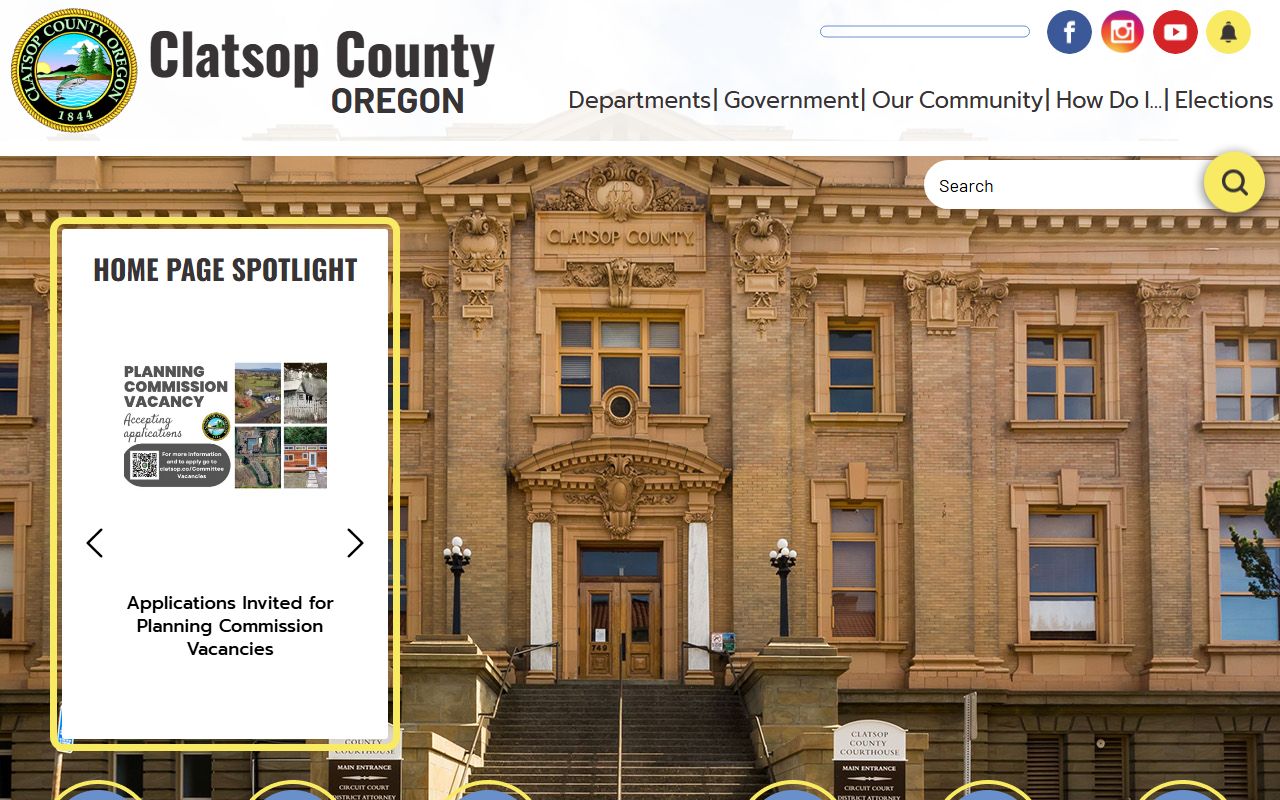
The Clatsop County Clerk's records page shown above outlines how to access documents that support genealogy research in the county.
Clatsop County Ancestry and Immigration
Scandinavian immigrants left a deep mark on Clatsop County. Finnish, Swedish, and Norwegian families settled here in large numbers during the late 1800s and early 1900s. They worked in fishing, logging, and farming. Their community organizations, churches, and social halls became the center of life in many Clatsop County towns.
Naturalization records are a key source for Clatsop County genealogy tied to immigration. When an immigrant became a citizen, they filed papers with the court. These records show the person's name, country of birth, date of arrival, and sometimes their ship. Clatsop County naturalization records are held at the Oregon State Archives. They cover a wide range of nationalities, not just Scandinavians, but also Chinese, Japanese, and many others who came through Astoria.
Church records from Finnish Lutheran, Swedish Baptist, and Norwegian Methodist congregations in Clatsop County record births, baptisms, marriages, and burials. Some of these records are still held by active churches. Others have been deposited with the Clatsop County Historical Society or the Oregon Historical Society in Portland. If your ancestors were part of the Scandinavian community in Clatsop County, church records may be the richest source you find.
Clatsop County Genealogy at the Historical Society
The Clatsop County Historical Society operates the Flavel House Museum, the Heritage Museum, and the Uppertown Firefighters Museum in Astoria. Their collections cover Astoria's history, Columbia River maritime industry, and Finnish and Scandinavian immigration to the region. For genealogy, the Heritage Museum holds photos, newspapers, and family files that can add detail to your research.
The society's library has local newspapers on microfilm. These papers are full of genealogy clues. Birth notices, marriage announcements, obituaries, and legal notices all appear in the Astoria papers. Ship arrival notices name passengers who came to Clatsop County by sea. Fire reports list people and businesses affected. Each of these items can help you build a more complete picture of your ancestor's life in Clatsop County.
The Heritage Museum also holds records from local businesses, fraternal organizations, and civic groups. If your ancestor belonged to a lodge, a labor union, or a volunteer fire company in Clatsop County, there may be records that name them and describe their involvement.
Note: The Clatsop County Historical Society accepts research requests by mail and email for those who cannot visit Astoria in person.
Clatsop County Records at Oregon Archives
The Oregon State Archives in Salem holds Circuit Court case files, probate estate files, and naturalization records from Clatsop County. The court files date back to the 1840s. They include civil cases, criminal matters, and probate proceedings. Maritime and shipping records from Clatsop County also appear in the state collection. These are rare documents that shed light on the river trade that built Astoria.
Probate files from Clatsop County list heirs and describe estates. They sometimes name relatives who lived in other states or countries. This is a real help for genealogy work because it can point you toward the place your ancestor came from before they settled in Clatsop County. Under ORS 192.420, you have the right to view these records at the archives or request copies by mail.
This image shows the State Archives inventory for Clatsop County. It details the types and date ranges of records held in Salem for Clatsop County genealogy research.
Clatsop County Vital Records for Ancestry
Birth and death certificates in Oregon start in 1903 at the state level. The Oregon Health Authority is the custodian. For Clatsop County events before 1903, church records, cemetery records, and newspaper notices serve as substitutes. Astoria's cemeteries hold graves that date to the mid-1800s. Their records list names, dates, and sometimes birthplace and family ties.
Marriage records at the Clatsop County Clerk go back to the 1840s. You can also find copies on microfilm at the State Archives. To order certified copies, use VitalChek or write to the state office in Portland. Fees are set by the custodian of the records as allowed under ORS 192.495.
Fort Clatsop and the Lewis and Clark connection draw many visitors to the county. While the expedition records are federal documents, they set the stage for the settlement that followed. Clatsop County genealogy researchers often start with curiosity about the Lewis and Clark era and then discover family ties to the settlers who came a generation later. The county's records preserve that story from the 1840s onward.
Nearby Counties
Clatsop County borders Columbia County and Tillamook County. If your ancestors lived near the county line, records may be filed in a neighboring county.