
Malheur County Genealogy Records
Malheur County fills the far southeast corner of Oregon, where irrigated farms meet open rangeland along the Idaho border. Genealogy research in Malheur County taps into agricultural records, land claims, and vital documents kept at the county seat in Vale. Searching these archives reveals the diverse communities that built this region after 1887. Researchers will find records tied to farming, ranching, and the cultural groups that gave Malheur County its unique character.
Malheur County Clerk Records
The Malheur County Clerk holds records that date to 1887, when the county was formed. Malheur County was named for the Malheur River. French-Canadian trappers gave the river its name, which means "misfortune" in French. Despite the name, the county became home to thriving farm communities. The clerk's office in Vale stores marriage licenses, deed transfers, and lien filings that form the base of Malheur County genealogy work.
Land records tell much of the Malheur County story. Irrigation projects turned dry ground into productive farmland. Onion fields, sugar beet plots, and cattle ranches spread across the county. Each land sale, water right, and farm lease left a paper trail in the clerk's office. These records show who owned the land, when they bought it, and what they grew. For Malheur County genealogy, a deed or water right filing can place an ancestor in a specific spot at a known date and link them to the farming economy that defined the region.
Most Malheur County records are open to the public. Under ORS Chapter 192, you can view and copy most documents held at the clerk's office. The staff in Vale can help you search the index books and find the records you need. Some older Malheur County records are on microfilm. Call ahead to check what format is available for the dates you want to search.
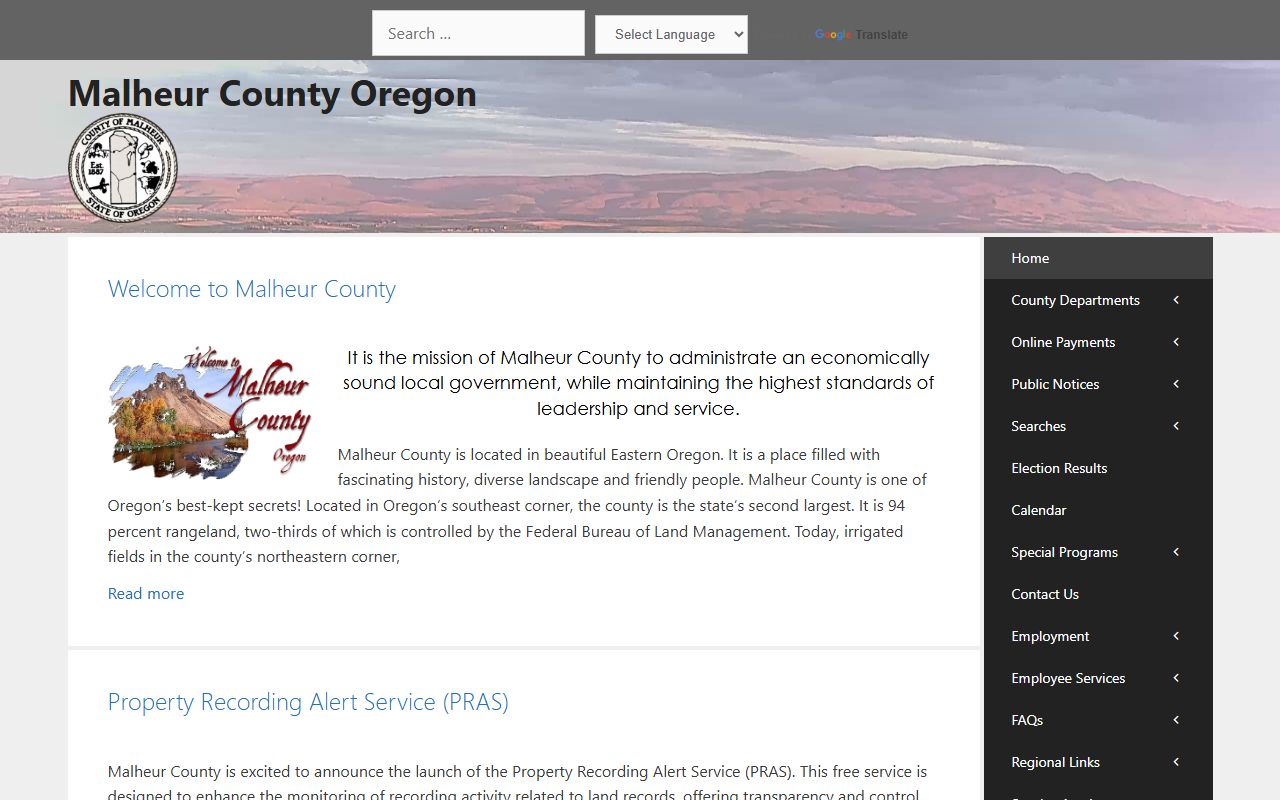
This image shows the Malheur County Clerk's records portal. It is a good first stop for anyone who wants to search for family history in Malheur County.
Malheur County Cultural Heritage
Malheur County stands out for its diverse cultural roots. Japanese-American families farmed the land around Ontario and Vale for generations. Basque sheepherders brought their traditions from the mountains of Spain and France. Hispanic communities grew along with the farming economy. Each group left its mark on Malheur County records. Marriage filings, land deeds, and court cases all reflect this rich mix of cultures.
The Japanese-American story in Malheur County has a painful chapter. During World War II, families of Japanese descent were forced from their homes on the West Coast. Some were sent to camps. After the war, many returned to Malheur County to rebuild. Their names appear in land records, business filings, and community documents from this era. For genealogy, these records can trace a family's path through one of the most difficult times in American history.
Basque sheepherders arrived in Malheur County in the late 1800s and early 1900s. They tended flocks on the open range and built tight-knit communities in towns like Jordan Valley. Church records, land claims, and probate files from these families are part of the Malheur County record set. These documents are valuable for anyone tracing Basque roots in Oregon.
Note: Some Malheur County records related to Japanese-American internment may require searching federal archives as well as local files.
Malheur County Ancestry Resources
The Four Rivers Cultural Center in Ontario documents the diverse heritage of Malheur County. Exhibits cover the stories of Japanese-American, Basque, Hispanic, and Native American communities. The center holds photos, oral histories, and artifacts that bring these stories to life. For Malheur County genealogy, the Four Rivers Cultural Center is a unique resource that no other county in Oregon can match.
Photos and oral histories are especially useful. A photo can show a family at work on a Malheur County farm. An oral history can describe daily life in a way that court records and deed books never could. The center's staff can help you search their collection for materials tied to a specific family or community in Malheur County. These personal sources add color and depth to the hard facts of genealogy research.
Local newspapers in Malheur County are another strong source. The Argus Observer in Ontario and other papers printed birth notices, death reports, and marriage news. Legal filings, land sales, and court outcomes also appeared in the papers. The county library may hold back issues on microfilm. A single newspaper item can confirm a date, reveal a family tie, or point to a new line of research in Malheur County.

The Four Rivers Cultural Center in Ontario preserves the stories of Malheur County's diverse communities. It is a key stop for ancestry research in this part of Oregon.
Malheur County State Archives Records
The Oregon State Archives in Salem holds Malheur County records on microfilm. Circuit Court case files, probate estate files, and school records are all part of this collection. Court files cover disputes over land, water, and farming rights that were common in an agricultural county like Malheur County. Probate records list heirs, describe property, and may include inventories of farm equipment and livestock.
School records from Malheur County show the names of students and teachers at rural schools across the county. These records can confirm that a child lived in Malheur County at a specific time. They also reveal the names of families in a given school district. For genealogy, school records can fill gaps where other Malheur County sources fall short.
Under ORS 192, most of these records are open to anyone who asks. The State Archives staff can help you locate Malheur County files by name, date, or case number. You can view the microfilm in their Salem research room or order copies by mail.
This shows the State Archives page for Malheur County. It lists all the record types on hand and the date ranges they cover.
Note: Malheur County irrigation district records may be held separately from the clerk's office, so ask the State Archives about these files if farming ancestry is your focus.
Malheur County Vital Records
Oregon began statewide registration of births and deaths in 1903. For Malheur County events before that year, church records, cemetery logs, and newspaper notices are the main sources. The Malheur County Clerk has marriage records from 1887 to the present. The State Archives holds microfilm copies as well.
Cemeteries in Malheur County offer another path for genealogy. Burial grounds in Vale, Ontario, Nyssa, and Jordan Valley hold headstones that list names, dates, and sometimes family links. Volunteers have transcribed some Malheur County cemetery records for online access. These transcriptions can save a long drive across southeastern Oregon.
Helpful sources for Malheur County vital records include:
- Malheur County Clerk for marriage records from 1887
- Oregon Health Authority for birth and death records from 1903
- Church records from Japanese-American, Basque, and Hispanic congregations
- Cemetery transcriptions posted online by volunteers
Searching Malheur County Genealogy
Start with the facts you have. Names, dates, and places give you a foundation. Then choose the record type that is most likely to fill your gaps. For Malheur County genealogy, land and irrigation records are often the best first step. Marriage and probate files work well for the early 1900s and beyond.
The Malheur County Clerk's office in Vale is the main local source. The State Archives in Salem offers microfilm copies of key files. The Four Rivers Cultural Center in Ontario adds photos, oral histories, and cultural context that no other source can match. Use all of these for the fullest picture of your family's life in Malheur County. Each source brings a different angle, and together they tell the story of an ancestor's time in this distinct corner of Oregon.
Nearby Counties
Malheur County borders Harney County, Baker County, and Grant County. If your ancestors lived near the county line, records may be filed in a neighboring county.