
Polk County Genealogy Records
Polk County lies in the heart of Oregon's Willamette Valley, where fertile soil drew some of the earliest settlers in the state. Genealogy research in Polk County reaches back to 1845, making it one of the oldest record sets in Oregon. Searching through land claims, court files, and vital records at the county seat in Dallas reveals deep family roots in this agricultural region. The archives hold clues for anyone tracing ancestry in western Oregon.
Polk County History and Genealogy
Polk County was one of the first counties in Oregon. It formed in 1845, four years before Oregon even became a state. The county took its name from President James K. Polk, who held office during the era of westward expansion. Dallas was chosen as the county seat, and it has served in that role ever since.
The Willamette Valley drew settlers from the Oregon Trail. Families came for the rich farmland and mild climate. Donation Land Claims gave early arrivals free ground if they farmed it. These claims are a prime source for Polk County genealogy. They list the settler's name, the date of the claim, and the exact location of the land. Many Polk County families can trace their roots to a Donation Land Claim filed in the late 1840s or 1850s.
Agriculture shaped every part of Polk County life. Fruit orchards, hop farms, and plant nurseries filled the valley floor. The fruit industry brought seasonal workers and created a web of business records. Nursery catalogs, orchard sale records, and water rights filings all appear in the Polk County archives. For genealogy, these records show what an ancestor did for a living and how they fit into the local economy.
Note: Donation Land Claim records are held at the National Archives, not at the Polk County Clerk's office, so plan your search accordingly.
Polk County Clerk Genealogy Records
The Polk County Clerk in Dallas keeps the core set of local records. Marriage licenses, property deeds, lien filings, and military discharge papers are all on file. The clerk has records from 1845, which gives Polk County one of the longest continuous record sets in Oregon. These files form the starting point for most genealogy work in the county.
Property deed records in Polk County are extensive. Land changed hands often as the valley developed. Early deeds describe large tracts of farmland. Later deeds show how those tracts were split into smaller parcels as towns grew. Each deed names a buyer and seller, states a price, and describes the property. For Polk County genealogy, deed records can track a family across generations as they bought, sold, or passed down land.
Marriage records from Polk County date to the 1840s. Each license names the couple, their ages, and often their parents. Witnesses are listed too. Under ORS Chapter 192, these records are public and open for inspection. The clerk's staff can help you search the index books and locate the records you need.
The image below shows the Polk County Clerk's website, which provides information on accessing county records.
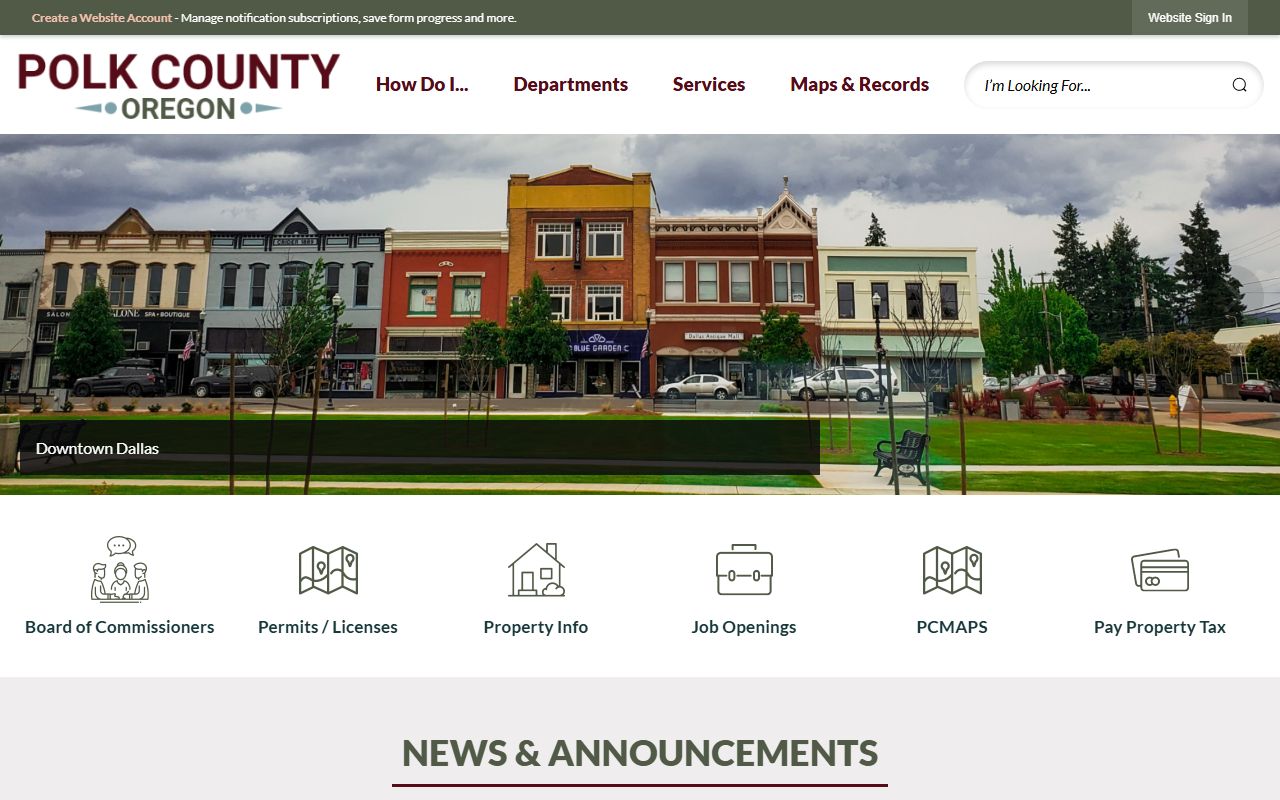
This site serves as the entry point for Polk County public records, including those used in genealogy research.
Polk County Agricultural Records
The fruit industry left a deep mark on Polk County. Orchards covered the valley slopes, and nurseries shipped plants across the region. Prune, cherry, and apple growers formed cooperatives to market their crops. The records of these cooperatives name members, list their farms, and show production totals. For genealogy, these files link a Polk County ancestor to a specific piece of ground and a line of work.
Water rights records are another key source. Farmers in Polk County needed water for their orchards and fields. The state water rights system created a paper trail for every irrigation claim. These records name the landowner, describe the water source, and state the amount of water claimed. They can confirm that a person owned a farm in Polk County at a specific date.
Hop farming was big in Polk County during the late 1800s. Hops required large crews at harvest time. Pay rolls and labor records from hop farms sometimes name workers who lived in the area. The hop industry declined after disease hit the crops, but its records survive in county and state archives. They offer a glimpse into a part of Polk County life that is easy to overlook in standard genealogy research.
Note: Agricultural cooperative records may be held by the cooperatives themselves or donated to local museums, so check multiple sources.
Polk County at Oregon State Archives
The Oregon State Archives in Salem holds Polk County records on microfilm. Circuit Court case files date from 1845. Probate estate records, school records, and other county documents are part of the collection. The State Archives is a strong choice for researchers who want to access Polk County genealogy records without a trip to Dallas.
Probate files from Polk County are rich. They list heirs, describe land and personal property, and sometimes include household inventories. In an agricultural county like Polk, a probate file might list orchard acreage, farm equipment, and livestock. These details show how a family lived and what they owned. For genealogy, probate records can reveal family connections that no other source provides.
School records are a less common but valuable source. Polk County school records at the State Archives list students, teachers, and school board members. They can place a child in a specific school district, which narrows down where a family lived. Under ORS 192.420, most of these records are open for public review.
The State Archives inventory for Polk County shows the types of records available and the date ranges they cover.
Polk County Museum and History
The Polk County Historical Society runs the Polk County Museum in Dallas. The museum holds photos, documents, and artifacts that span the county's history. Collections cover the early settlement era, the fruit industry, and the growth of towns like Dallas, Monmouth, and Independence. For genealogy, the museum offers materials that official records do not always capture.
Old newspapers from Polk County are a strong source. They printed birth notices, wedding reports, and death announcements. Legal notices for estate sales and land auctions also ran in the local papers. A newspaper search can turn up a name that appears in no other Polk County record. The museum and the Dallas Public Library both hold runs of local newspapers on microfilm.
The museum staff can help you search their files by family name. Visitors over the years have left family trees and research notes that may connect to your own Polk County ancestry. These donated materials can save you time and point you toward records you might not find on your own.
Vital Records for Polk County
Birth and death records at the state level date from 1903. The Oregon Health Authority handles requests for copies. For Polk County events before 1903, church records and cemetery logs are the main sources. Many early Polk County settlers were members of churches that kept careful records of baptisms, marriages, and burials.
Cemetery records in Polk County cover dozens of small burying grounds scattered across the valley. The Dallas Cemetery, the IOOF Cemetery in Independence, and others hold records that list names, birth dates, death dates, and sometimes family ties. Under ORS 192, public cemetery records are available for genealogy research. Some of these records have been transcribed and posted online by volunteer groups.
Marriage records remain at the Polk County Clerk's office. The earliest date to the mid-1840s. These are among the oldest marriage records in the entire state of Oregon. They are a cornerstone of Polk County genealogy research.
Polk County Research Steps
Start with the basics. Gather every name, date, and place you already have. Then decide which record type will fill your biggest gap. For Polk County genealogy before 1860, Donation Land Claims and early deed records are the best bet. For the late 1800s, look at marriage records, probate files, and agricultural records.
Here are steps to guide your Polk County research:
- Search the Polk County Clerk for marriage and deed records from 1845
- Check the Oregon State Archives for probate, court, and school files
- Visit the Polk County Museum for photos and local histories
- Review Donation Land Claim records at the National Archives
- Search cemetery records for burial dates and family ties
Polk County's long history means records span nearly two centuries. That depth is a gift for genealogy work. With patience and a clear plan, you can trace a family through the full arc of life in Oregon's Willamette Valley.
Nearby Counties
Polk County borders Yamhill County, Benton County, Lincoln County, Marion County, and Tillamook County. If your ancestors lived near the county line, records may be filed in a neighboring county.