
Search Wallowa County Genealogy
Wallowa County lies in the far northeast corner of Oregon, framed by steep mountains and deep river canyons. Genealogy research here taps into ranch records, land files, and vital documents kept at the county seat in Enterprise. Searching Wallowa County archives can connect your family to the ranching pioneers and Nez Perce history that define this remote region. Records go back to 1887, when the county split from Union County, and they offer a clear path for tracing roots in this rugged landscape.
Wallowa County and Nez Perce History
The Wallowa Valley was the homeland of the Nez Perce people for thousands of years. Chief Joseph led his band here until 1877, when the federal government forced them to leave. This removal is one of the most well-known events in Oregon history. It shaped the land and the people who came after. For genealogy, this history matters. It explains why settlement records in Wallowa County start when they do and why certain lands were opened for claim in the late 1870s and 1880s.
After the Nez Perce left, white settlers moved into the Wallowa Valley. They filed land claims, built ranches, and started towns. The first deed books in Wallowa County record these early claims. Names, dates, and tract details fill the pages. Each entry is a piece of the puzzle for anyone tracing Wallowa County ancestry. The county formed in 1887, and the clerk began to log all official acts from that date forward.
The Wallowa County Museum in Enterprise documents this full arc of history. Exhibits cover the Nez Perce era, the removal of 1877, and the pioneer settlement that followed. Photos, maps, and personal items from early Wallowa County families are on display. These items can add depth to a genealogy search by showing what life was like in the valley during its first decades as a county.
Wallowa County Clerk Genealogy Records
The Wallowa County Clerk in Enterprise is the main source for local records. Marriage files, deed books, and lien records date from 1887. These form the base of most Wallowa County genealogy work. The clerk can help you find old deeds, look up marriage dates, and pull copies of filed documents.
Ranch land sales make up a large share of the early deed books. Wallowa County was built on ranching. Cattle and sheep spread across the valley and up into the hills. When ranchers sold land or passed it to their children, the clerk recorded the transfer. These records show who owned what ground and when the sale took place. For genealogy, they are a strong way to track a family through Wallowa County over time. Livestock brand records add another layer. Brands were registered with the county, and the brand books list the owner's name and the mark they used. These books can confirm that a person ran stock in Wallowa County at a known date.
Under ORS Chapter 192, most records at the Wallowa County Clerk's office are public. You can view them in person or request copies by mail. Staff in Enterprise are used to helping genealogy researchers and can guide you through the index system.
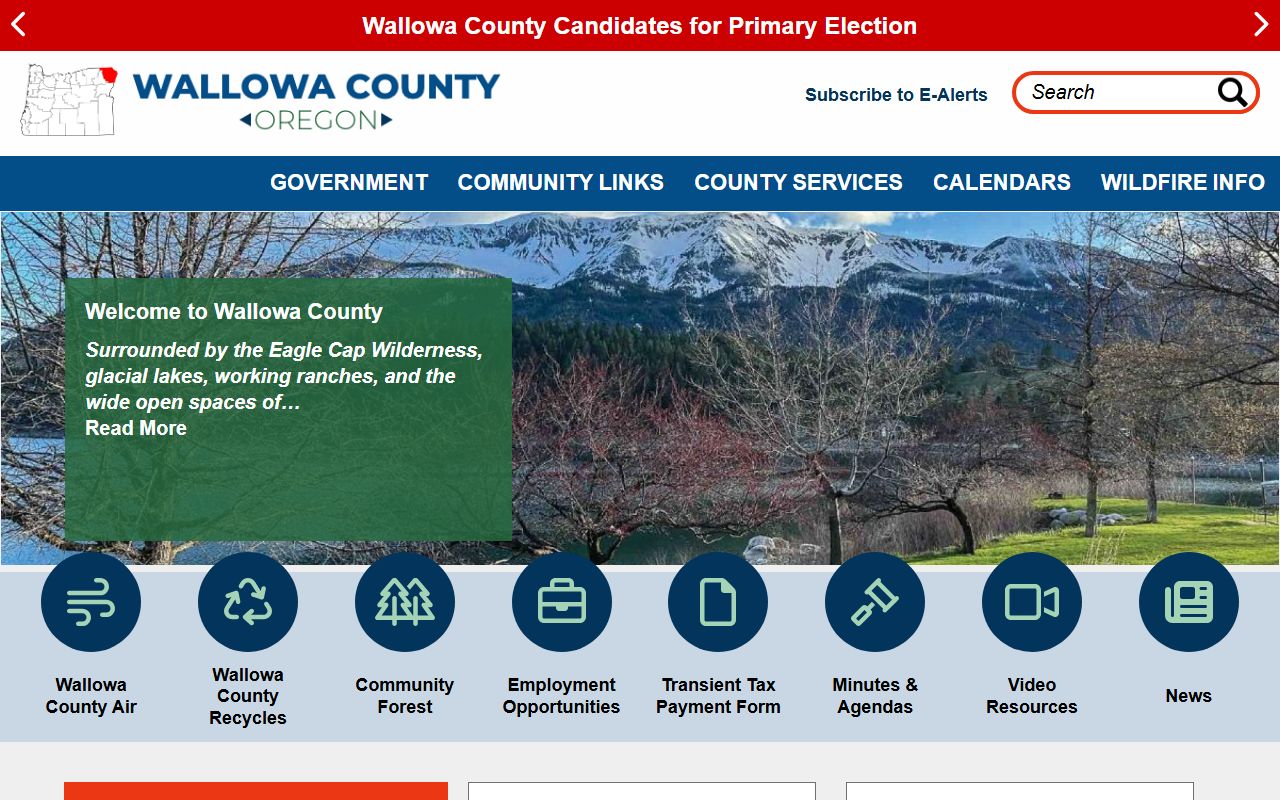
This image shows the Wallowa County government website. It is a good starting point for learning what records the clerk holds and how to request access for your genealogy search.
Note: Some early Wallowa County deed books have been rebound due to heavy use, so page numbers may not match older index references.
Wallowa County Ranching Records
Ranching defined Wallowa County from its start. The valley grass was thick, the water was clean, and the land was cheap. Settlers came from other parts of Oregon and from states to the east. They brought cattle and sheep and built the ranches that still dot the valley today. The records they left behind are gold for genealogy work.
Property tax rolls from the county assessor list each ranch owner and the value of their land and stock. These rolls are annual, which means you can track a family year by year through Wallowa County. Water rights filings show who drew from which creek or river. In a ranching county, water was life, and fights over water often ended up in court. Circuit Court case files from these disputes hold names, dates, and sworn testimony. These files are at the Oregon State Archives and are a rich source for Wallowa County genealogy.
Homestead records from the federal government also tie into Wallowa County ranching history. Many ranches started as homestead claims filed under federal law. The National Archives holds these files, which include the name of the filer, the date, and a description of the land. A homestead file can prove that your ancestor was in Wallowa County at a specific time and place.
Wallowa County at State Archives
The Oregon State Archives in Salem holds Wallowa County records on microfilm. Circuit Court files, probate estate files, and school records are all part of this set. The collection covers the full span of Wallowa County history from 1887 forward. If you cannot travel to Enterprise, the State Archives is the next best place to search.
Probate records from Wallowa County are strong tools for genealogy. They list heirs, describe ranch land, and sometimes include inventories of livestock and personal goods. A Wallowa County probate file might show that your ancestor owned forty head of cattle and a house in Joseph. That level of detail builds a vivid picture of a family's life. These files are indexed and stored on microfilm reels at the State Archives.
The image above shows the State Archives listing for Wallowa County. It tells you which record types are held and what years they cover, which helps you plan your research trip to Salem.
Wallowa Valley Community Records
Enterprise, Joseph, Wallowa, and Lostine are the main towns in Wallowa County. Each has its own story, and each left records that feed into genealogy work. Church logs, school files, and local newspapers all hold names and dates that official county records may miss.
The Wallowa County Chieftain newspaper has run for over a hundred years. Its pages hold birth notes, death reports, marriage news, and legal notices. Old issues are on microfilm at the Enterprise Public Library and at the State Archives. A single mention in the Chieftain can confirm a date or a family link that you could not prove from any other source. Newspapers are one of the most overlooked tools in Wallowa County genealogy research, yet they often hold the best detail.
Cemetery records also help. Several small cemeteries are spread across the county. Their logs list names, dates of birth and death, and sometimes family ties. Some of these records have been transcribed by local genealogy groups and posted online. The town of Joseph has a historic cemetery with markers that date back to the 1880s. Walking through it can give you a sense of the families that built Wallowa County.
Under ORS 192, public records in Wallowa County must be open for review upon request. Cemetery records held by a public body fall under this rule. Private cemetery records depend on the owner.
Note: The Enterprise Public Library has a small but useful genealogy shelf with local history books and family files donated by Wallowa County residents.
Searching Wallowa County Ancestry
Begin with the facts you already have. List every name, date, and place. Then decide which record type is most likely to fill your gaps. For Wallowa County genealogy, ranch land records and probate files are often the best first step.
Key resources for Wallowa County research include:
- Wallowa County Clerk for marriage and deed records
- Oregon State Archives for probate and court files
- Enterprise Public Library for old newspapers
- Wallowa County Museum for photos and pioneer items
- National Archives for homestead and census records
Online tools can cut down on travel time. The State Archives has a catalog you can search from home. Census records from 1890 through 1950 are online at various genealogy sites. Local groups may have indexed Wallowa County records and shared them on the web. These indexes can point you to the right microfilm reel or file box before you ever set foot in an archive. Under ORS 192.495, the custodian of records may charge a fair fee for copies. Plan for a small cost per page when you order from Wallowa County or the State Archives.
Nearby Counties
Wallowa County borders Union County, Baker County, and Umatilla County. If your ancestors lived near the county line, records may be filed in a neighboring county.