
Morrow County Genealogy
Morrow County rests in north-central Oregon along the banks of the Columbia River. Genealogy research here draws from land records, court files, and vital documents kept at the county seat in Heppner. Searching through Morrow County archives leads to wheat farm families, flood survivors, and early settlers who shaped this part of the state. The records date back to 1885 and hold clues for anyone tracing roots in this rural stretch of Oregon.
Morrow County History and Records
Oregon carved Morrow County from Umatilla County in 1885. The new county took its name from Jackson L. Morrow, a state legislator who pushed for its creation. Heppner was picked as the county seat. From the start, the clerk in Heppner began to log deeds, marriages, and court filings. These early Morrow County records form the base of most genealogy work in the area.
The land around Morrow County drew wheat growers. Wide open plains and dry summers made the region well suited for grain crops. Families came to farm, and their names fill the deed books. Land transfers show who bought ground, when they sold, and at what price. For genealogy research, these records tie an ancestor to a place and time in Morrow County. They also show ties between families who traded land back and forth over the years.
Morrow County's early growth was slow but steady. Small towns sprang up along creek beds and rail lines. Lexington, Irrigon, and Boardman all grew as stops on the way to larger markets. Each town had its own set of records. School rolls, church logs, and post office files add depth to Morrow County genealogy. These small-town records can fill gaps that the county clerk files miss.
Note: Morrow County records before 1885 may be filed under Umatilla County, so check both sets when tracing early ancestors.
Morrow County Genealogy and the Heppner Flood
On June 14, 1903, a wall of water tore through Heppner. A cloud burst over the hills south of town sent a flash flood down Willow Creek. The flood killed more than 200 people in a matter of minutes. It was one of the worst natural disasters in Oregon history. For Morrow County genealogy, this event left a deep mark on the records.
Death records from the flood list names, ages, and places of burial. Some victims were never found. Court records show probate cases filed for those who died without a will. Property claims and insurance filings fill more of the picture. The Heppner flood changed the makeup of the entire county. Whole families were lost. Others moved away and never came back. If your Morrow County ancestors lived in Heppner around 1903, the flood records are a key source for genealogy research.
Newspaper accounts from the time give vivid details. The Heppner Gazette and other Oregon papers ran lists of the dead and missing. These reports name people who may not show up in any official Morrow County record. Relief fund lists also name survivors who received aid. Under ORS Chapter 192, public records tied to this disaster are open for review. The Oregon State Archives holds some of these flood-era documents on microfilm.
Morrow County Clerk Genealogy Files
The Morrow County Clerk in Heppner is the main source for local records. Marriage licenses, property deeds, and lien filings are all kept here. The clerk also holds military discharge records that veterans filed with the county. These discharge papers can show where a person served, their rank, and their dates of service. For Morrow County genealogy, military records add a layer of detail that other files lack.
Deed records in Morrow County go back to 1885. They show the full chain of title for every parcel in the county. Each deed names a buyer and a seller, lists the price, and describes the land. Wheat farms changed hands often as droughts or floods hit the region. Tracing these transactions can map out a family's time in Morrow County and show which neighbors they dealt with.
The clerk's office is open to the public. You can search index books in person or ask staff for help. Some Morrow County records have been put on microfilm. Others are still in their original bound volumes. Access to these records falls under ORS 192.420, which requires public bodies to make records available upon request.
Here is a look at the Morrow County records page at the Oregon State Archives.
This page lists the types of Morrow County records held at the State Archives, along with the date ranges they cover.
Morrow County Museum and Local History
The Morrow County Historical Society runs the Morrow County Museum in Heppner. The museum holds photos, documents, and artifacts from across the county's past. Collections include items from the Heppner flood, wheat farming tools, and personal papers from early settlers. For genealogy, the museum can offer photos and letters that no government archive has.
Old photos are a strong suit of the museum's collection. Group shots of school classes, town gatherings, and farm crews put faces to names you find in Morrow County records. The museum staff can help you search their files by family name or by topic. They also keep a small research library with local histories and family trees compiled by past visitors.
The wheat industry shaped life in Morrow County for more than a century. Farm families worked the same ground for generations. Their stories show up in grain elevator records, cooperative minutes, and irrigation district files. These records are not always easy to find, but the museum can point you in the right direction. Morrow County genealogy often leads back to the wheat fields and the families who worked them.
Note: The Morrow County Museum has limited hours, so call ahead to plan your genealogy research visit.
Morrow County Records at State Archives
The Oregon State Archives in Salem holds Morrow County records on microfilm. Circuit Court case files, probate estate records, and other county documents are part of this collection. The State Archives is a good choice for researchers who cannot travel to Heppner. You can view microfilm in the research room or order copies by mail.
Probate records are among the most useful files for Morrow County genealogy. A probate file can list heirs, describe property, and include personal inventories. In a wheat-growing county like Morrow, probate files often list farm equipment, livestock, and land values. These details paint a clear picture of how an ancestor lived. They also reveal family ties that no other record shows.
Circuit Court files from Morrow County cover civil and criminal cases from 1885 forward. Land disputes, divorce filings, and estate contests all appear in these files. Each case names the parties, lists witnesses, and includes the judge's ruling. For genealogy research, court records can break through brick walls that other sources cannot. They sometimes name relatives, in-laws, and neighbors who appear nowhere else in the Morrow County record set.
The State Archives also holds records tied to the Heppner flood. These include court filings, estate cases for flood victims, and reports filed by county officials. Under ORS 192, these records remain open to the public and can be accessed for genealogy research purposes.
Vital Records for Morrow County
Birth and death records in Oregon are kept at the state level by the Oregon Health Authority. The state holds birth records from 1903 and death records from the same year. For Morrow County births and deaths before 1903, you must rely on church records, cemetery logs, and newspaper notices. These older sources may be the only proof of a life event for an early Morrow County ancestor.
The image below shows the Oregon Vital Records Center portal, which handles requests for birth and death certificates across the state.
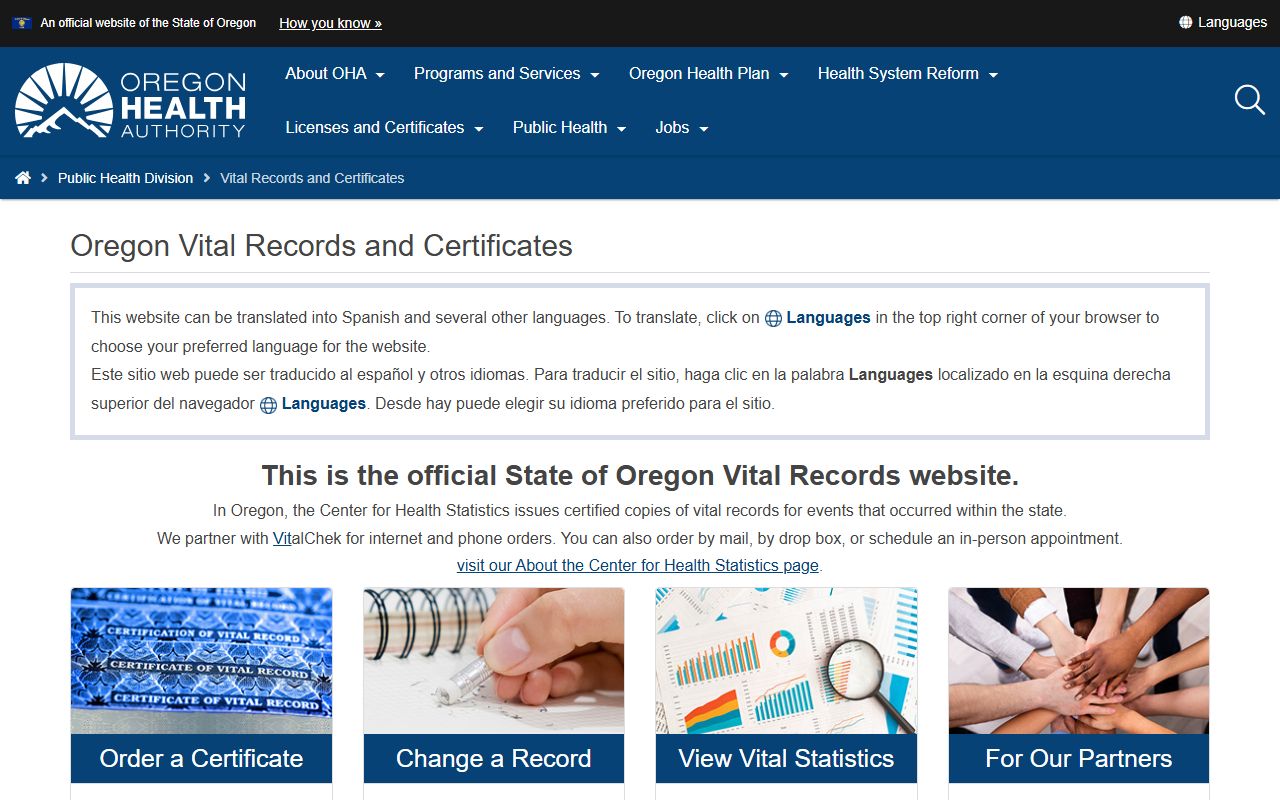
This state portal serves as the main access point for certified copies of vital records, including those tied to Morrow County residents.
Marriage records are held at both the county and state level. The Morrow County Clerk has marriage records from 1885 forward. Cemetery records add another path for Morrow County genealogy. Several small cemeteries dot the county, and their logs list names, dates, and sometimes family ties. The Heppner cemetery holds many graves from the 1903 flood, and its records are a key source for anyone researching that event.
Note: Some vital records have restricted access based on the age of the record and your link to the person named, so check the rules before you request copies.
Tips for Morrow County Genealogy
Good research starts with what you know. Write down the names, dates, and places you have. Then pick the record type most likely to fill your gaps. For Morrow County, land records and probate files are often the best first step for ancestors who lived here before 1920.
Here are key steps for Morrow County genealogy research:
- Search the Morrow County Clerk's office for marriage and deed records
- Check the Oregon State Archives for probate and court files
- Visit the Morrow County Museum for photos and local histories
- Review old Heppner newspapers for birth, death, and marriage notices
- Look into Heppner flood records if ancestors lived in the area around 1903
Online tools can speed up the search. The State Archives has an online catalog that lists Morrow County holdings by record type and date range. National genealogy sites may have indexed some Morrow County records as well. Local genealogy groups sometimes post transcriptions of cemetery records and church logs that cover Morrow County. These can save hours of work and point you to sources you might otherwise miss.
Nearby Counties
Morrow County borders Gilliam County, Umatilla County, Wheeler County, and Grant County. If your ancestors lived near the county line, records may be filed in a neighboring county.