
Search Sherman County Genealogy
Sherman County stretches across the Columbia Plateau in north-central Oregon, where vast wheat fields meet the Columbia River gorge. Genealogy research in Sherman County draws from land records, court files, and vital documents stored at the county seat in Moro. Searching these archives reveals the stories of farming families who settled this windswept region. Records date back to 1889 and offer a clear path for tracing ancestry in one of Oregon's least populated counties.
Sherman County Origins and Records
Sherman County formed in 1889 from Wasco County. It was named for General William Tecumseh Sherman, a Civil War leader. Moro became the county seat. The county sits on high ground between the Columbia River to the north and the Deschutes River to the west. Dry summers and cold winters define the climate here.
Wheat was the reason most people came to Sherman County. The deep soil of the Columbia Plateau grew hard red winter wheat with little rain. Farmers filed land claims, bought ground from railroads, and built homesteads across the open plains. The records from these transactions form the core of Sherman County genealogy. Deed books show who owned what land, when they got it, and what they paid. Tax rolls confirm ownership and track changes over time.
Life in Sherman County was tied to the land. Towns were small. Moro, Wasco, Rufus, and Grass Valley served as market centers for the farms around them. Each town had a school, a church, and a few stores. The people who lived here knew each other. That close-knit quality shows up in the records. Witnesses on deeds and marriage licenses were often neighbors or relatives. For Sherman County genealogy, these connections can help you map out a family's social world.
Note: Sherman County records before 1889 are filed under Wasco County, so check both sets for early ancestors in this region.
Sherman County Clerk Records
The Sherman County Clerk in Moro holds the primary set of local records. Marriage licenses, deed records, and lien filings date from 1889. Military discharge records filed by veterans are also kept here. The clerk's office is small, which reflects the county's low population, but the records are well maintained and open to the public.
Deed records in Sherman County show the full history of land ownership on the plateau. Large wheat farms passed from one generation to the next. Some families held the same ground for over a century. Tracing these land records is a key part of Sherman County genealogy. Each deed names the parties, describes the property, and states the price. Mortgage records add more detail by showing how farms were financed.
Marriage records from Sherman County list the bride and groom, their ages, and the date of the ceremony. Witnesses are named too. In a county this small, marriages often joined farming families whose land sat side by side. Under ORS Chapter 192, these records are open for public inspection. The clerk can help you search the index books in person.
Here is a look at the Sherman County website, which provides information on county departments and record access.
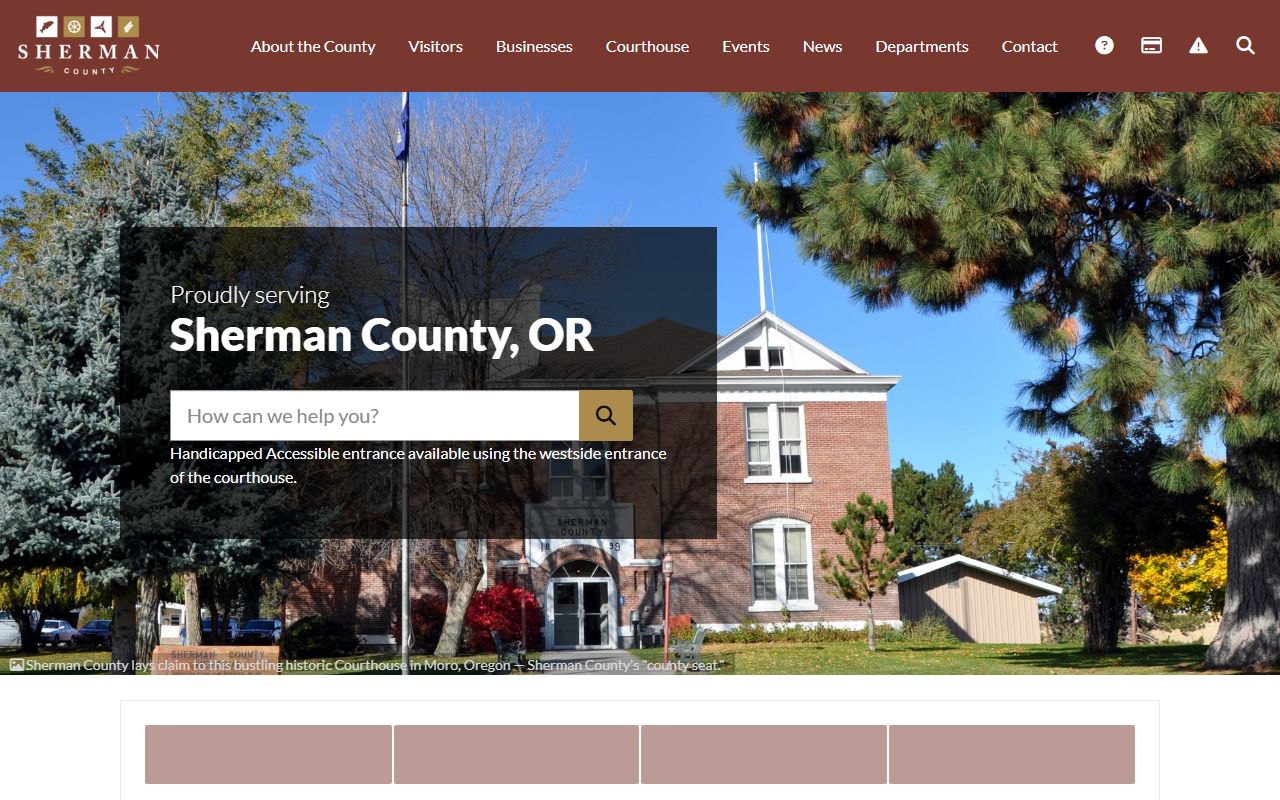
This site is the starting point for accessing Sherman County public records useful in genealogy work.
Sherman County Wheat Farm Records
Wheat defined Sherman County. Large-scale farming operations covered thousands of acres. The records of these operations tell the story of families who built their lives on the land. Crop production reports, elevator receipts, and cooperative records all name farmers and their output. For genealogy, these records place an ancestor in Sherman County and show what they did for a living.
The railroad played a big role in Sherman County's wheat economy. Rail lines carried grain to markets in Portland and beyond. Railroad land grants brought settlers to the county. Land sale records from the railroad companies name buyers and describe the parcels they purchased. These records sit at the Oregon Historical Society and the National Archives. They are a valuable source for Sherman County genealogy, especially for families who arrived in the 1880s and 1890s.
Farm equipment and technology changed over the decades. Early farmers used horse-drawn plows. By the early 1900s, steam-powered machines did the work. These changes show up in probate files and tax assessments. A probate inventory that lists a combine harvester tells a different story than one that lists a team of horses. For genealogy, these details bring an ancestor's daily life into focus.
Sherman County at State Archives
The Oregon State Archives in Salem holds Sherman County records on microfilm. Circuit Court case files, probate estate records, and school records are part of the collection. The State Archives is useful for researchers who cannot travel to Moro. You can view the records in the research room or order copies by mail.
Probate records from Sherman County often detail the assets of wheat farmers. They list land, equipment, grain stocks, and bank accounts. Heirs are named in the probate petition, and the final distribution shows who received what. These files can reveal family ties that no other Sherman County record captures. A farm that passed to a daughter and her husband, for instance, shows a family connection and a new surname to trace.
School records are another gem for Sherman County genealogy. They list students, teachers, and school board members by district. In a rural county, school districts were tied to specific communities. Knowing which school a child attended can pin down where a family lived within Sherman County. Under ORS 192.420, these school records are open for public access.
The State Archives page for Sherman County lists the types of records on hand and the date ranges they cover.
Note: Some Sherman County school district records are incomplete due to the small size of rural schools, so combine them with other sources for best results.
Sherman County Museum Resources
The Sherman County Historical Museum in Moro preserves the county's past. The museum holds photos, farm equipment, and personal artifacts from the early settlement days through the twentieth century. For genealogy, the photo collection is a standout. Group shots of threshing crews, school classes, and town events put faces to the names found in Sherman County records.
Old newspapers from the county cover births, deaths, marriages, and legal notices. The Moro Observer and other local papers ran columns that named people by name. A mention in the social column can confirm that a person lived in Sherman County at a given date. These papers are available on microfilm at the museum and at the Oregon Historical Society in Portland.
The museum also holds personal papers and family histories donated by county residents. Past visitors have left research notes and family trees. These materials may overlap with your own Sherman County ancestry and save you hours of duplicate work.
Vital Records for Sherman County
Birth and death records in Oregon start at 1903 at the state level. The Oregon Health Authority handles requests. For Sherman County events before that date, church records and cemetery logs are the main sources. The county's small population means fewer records overall, but those that exist are often detailed.
Cemetery records in Sherman County cover several rural burying grounds. The Moro Cemetery and others hold logs that list names, dates, and family ties. These records are a good backup when vital records come up short. Under ORS 192, public cemetery records can be accessed for research.
Marriage records stay with the Sherman County Clerk. They date from 1889 and are indexed for easy searching. The small volume of records in Sherman County means searches tend to go fast. Staff in Moro can help you find what you need in a single visit.
Sherman County Research Guide
Start with what you know. List every name, date, and place in hand. Then choose the record type most likely to fill your gap. For Sherman County genealogy, land records and probate files are the best first step for ancestors who farmed here.
Key steps for Sherman County research:
- Search the Sherman County Clerk for deed and marriage records
- Check the Oregon State Archives for probate, court, and school files
- Visit the Sherman County Historical Museum for photos and artifacts
- Review local newspapers for birth, death, and social notices
- Look into railroad land sale records at the Oregon Historical Society
Sherman County is small, and its records reflect that. But the depth of detail in farm-related documents can surprise you. A single deed or probate file can open up an entire branch of a family tree. Take your time, check every index, and let the records tell the story of your Sherman County ancestors.
Nearby Counties
Sherman County borders Gilliam County, Wasco County, Wheeler County, and Jefferson County. If your ancestors lived near the county line, records may be filed in a neighboring county.